Introduction
For decades, traditional access control methods such as mechanical keys, RFID cards, and password locks have suffered from inherent flaws: keys can be lost, cards can be copied, and passwords can be leaked or forgotten. In contrast, a professional biometric access control system verifies identity through unique human biological features, enabling error-free, anti-counterfeiting and highly efficient access management.

This article traces the complete development history of the biometric access control system, explains its technological iteration logic, and reveals why modern intelligent biometric access systems can maintain stable and error-free operation in long-term high-frequency use scenarios.
According to 2025 global security industry statistical data, the market size of biometric access control has exceeded $18.6 billion, with a compound annual growth rate of 12.3%. More than 78% of commercial buildings, industrial parks and high-security institutions have replaced traditional card access systems with biometric solutions, mainly thanks to its ultra-low error rate and zero-copy security advantages Bayometric: Biometric Authentication History and Timeline.
The Initial Stage of Biometric Access Control (14th Century – Early 20th Century): Manual Identification Exploration
The embryonic form of biometric access control originated long before electronic technology. As early as the 14th century, Chinese merchants used inked fingerprints to confirm personal identity and sign commercial contracts, forming the earliest manual biometric identification behavior. In the 1870s, Scottish surgeon Dr. Henry Faulds systematically studied fingerprint uniqueness and published academic papers, proposing standardized fingerprint recording and identification methods, laying a theoretical foundation for modern fingerprint biometrics.
In 1888, British scholar Francis Galton further verified that each person’s fingerprint is unique and lifelong unchanged, and established a complete fingerprint classification system. In 1883, French police officer Alphonse Bertillon created anthropometry identification by measuring human body proportions.
However, limited by manual recording and artificial judgment, early biometric identification relied entirely on human work, with low efficiency and high error rate, and could only be used for simple identity verification, unable to achieve automatic access control.
Electronic Automation Stage (1960s – 2000s): Preliminary Commercialization of Biometric Access Control
With the development of electronic computer technology, biometric access control officially entered the automated era. In the 1960s, Stanford Research Institute developed the world’s first preliminary facial recognition system, realizing machine-based facial feature capture and comparison for the first time. In the 1990s, British scientist John Daugman invented the classic iris recognition algorithm, which greatly improved biometric identification accuracy and effectively reduced system recognition errors.
From the 1990s to the early 2000s, fingerprint access control equipment was gradually commercialized and applied in enterprise offices and confidential institutions. Early electronic biometric systems completed automatic identification through simple feature comparison algorithms, getting rid of manual intervention.
However, affected by low-precision sensors and immature algorithms, the system was prone to recognition failure caused by finger wear, facial light changes and other external factors, with an error rate of about 3% to 5%, which restricted large-scale popularization.
Intelligent High-Precision Stage (2010 – Present): Zero-Error Biometric Access Control Maturity
After 2010, driven by artificial intelligence, big data and high-precision sensing technology, biometric access control system ushered in explosive upgrading, realizing stable operation with almost no mistakes. Modern biometric access systems adopt deep learning algorithms, multi-dimensional feature comparison and dynamic identification technology, which can automatically adapt to light changes, facial makeup, finger skin wear and other interference factors.
Industry test data shows that the recognition error rate of mainstream modern biometric access control products has been reduced to less than 0.01%, and the false rejection rate is controlled below 0.03%. Multi-modal biometric technology that integrates face, fingerprint, palm vein and QR code further eliminates single identification loopholes, achieving truly accurate and error-free identity verification.
At this stage, biometric access control has expanded from high-security confidential scenarios to civil fields such as communities, gyms, schools and shopping malls, becoming the mainstream access control solution for smart buildings.
RS Security’s Optimized Biometric Access Control Solutions
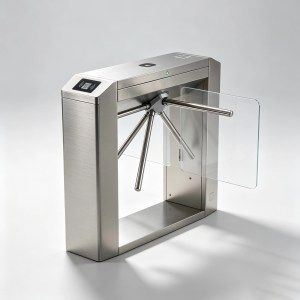
As a professional manufacturer focusing on intelligent access control equipment R&D and manufacturing for 15+ years, RS Security deeply masters the iterative technology of biometric access control, launching high-precision and zero-error biometric access systems suitable for all scenarios.
Different from ordinary single-biometric products, our equipment RS988 adopts upgraded AI deep learning algorithms and high-definition sensing modules, supporting multi-modal identification of face, fingerprint and palm vein. It can effectively resist external interference such as light, temperature and skin changes, maintaining a long-term stable ultra-low error rate.
All products support 24-hour high-frequency operation, seamless docking with venue management systems, and realize automatic recording, real-time early warning and permission intelligent management. While ensuring error-free access verification, it balances safety, efficiency and user experience, helping global users build intelligent and reliable access control systems.
Conclusion
From ancient manual fingerprint identification to modern AI intelligent multi-modal recognition, the biometric access control system has gone through hundreds of years of technological iteration. The core development trend is continuous improvement of identification accuracy, anti-interference ability and intelligent level, finally realizing stable and error-free daily operation.
With the continuous upgrading of security needs, high-precision, multi-modal and intelligent biometric access control technology will further replace traditional access methods and become the core standard configuration of future smart venues.