Introduction
Door access systems are the core security infrastructure of modern buildings, covering residential communities, commercial offices, industrial parks, medical institutions and government facilities. From ancient mechanical locks to today’s intelligent cloud-based access management platforms, door access systems have completed iterative upgrades in security, convenience and intelligence.
According to 2025 global security industry statistics, the door access control market will reach $14.8 billion in market size, with a year-on-year growth rate of 8.3%. Intelligent access products have replaced traditional mechanical locks and become the mainstream choice for venue security management 2N Official Blog: The History of Door Access Control Systems. This article systematically sorts out the complete evolution history of door access systems and analyzes the technical characteristics and applicable scenarios of current mainstream product types.
The Complete Evolution History of Door Access Systems
The development of door access systems spans thousands of years, and the modern electronic access control industry has experienced five core technological iterations, completely changing the mode of building safety management.
1. Mechanical Lock Era (Before the 1960s)
The earliest door access management relied purely on manual mechanical lock structures. In the 19th century, the mature Yale pin tumbler lock became the mainstream access tool. This type of mechanical access device only relied on key matching for opening and closing, with single function, poor anti-theft performance, and no access record and permission management capabilities. It was unable to adapt to the multi-person access management needs of commercial and public buildings, laying the foundation for the birth of electronic door access systems.

2. Early Electronic Access Stage (1960s–1980s)
In the 1960s, the first generation of electronic door access systems came out, adopting punch card recognition technology to realize preliminary automatic access control. In the 1980s, magnetic stripe card access technology was widely promoted, replacing cumbersome punch cards. This stage realized the transformation from manual key unlocking to electronic verification, but the equipment had poor stability, easy card copying and data loss problems, and was only used in a small number of high-security government and enterprise scenarios.
3. Swipe Card Intelligent Access Stage (1990s–2010)
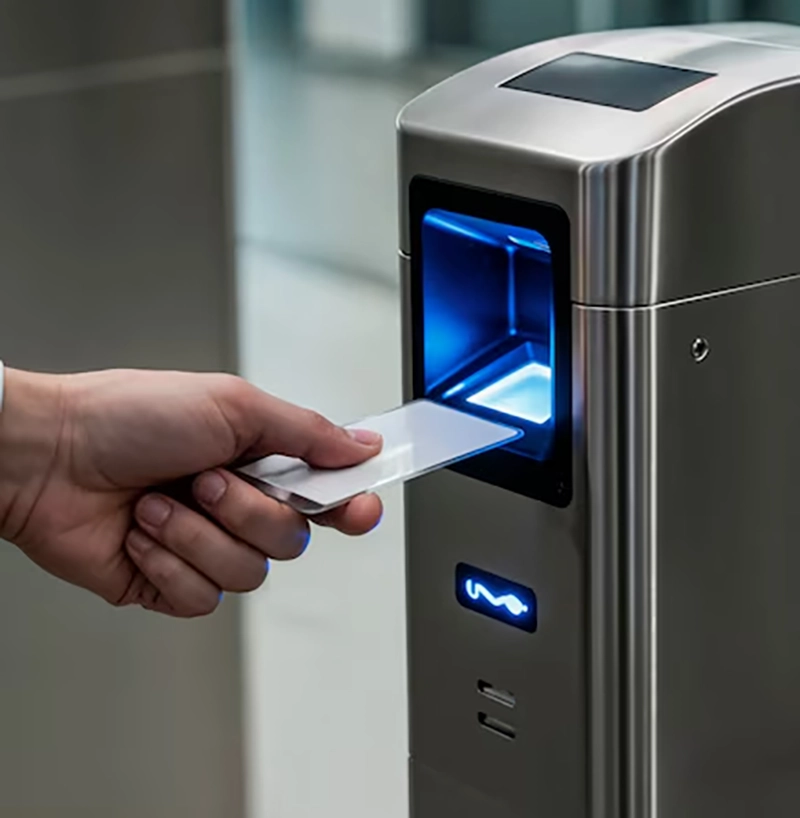
With the popularization of IC and ID card technology, door access systems entered the rapid popularization stage. The system independently stores access data locally, supports one-card multi-purpose management, and can record access time and personnel information. Compared with magnetic stripe cards, IC cards have higher encryption performance and are not easy to copy. During this period, access control systems began to be widely used in office buildings, communities and factories, forming the basic prototype of modern access management.
4. Biometric Access Stage (2010–2020)
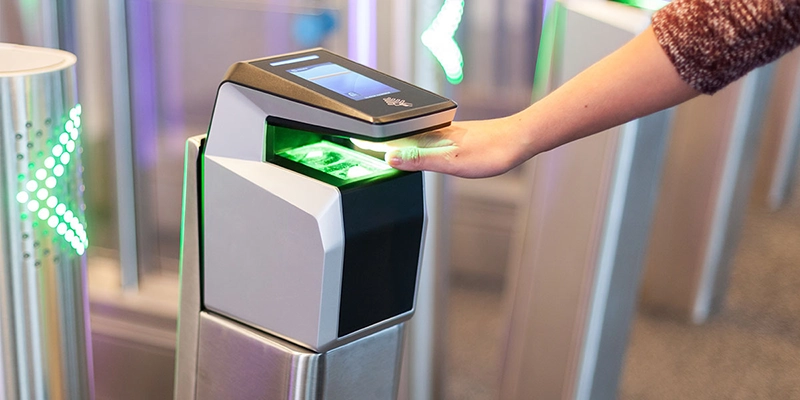
Driven by biometric technology, fingerprint, face and palm vein recognition door access systems gradually became mainstream. Abandoning physical card credentials, the system uses unique biological features for identity verification, fundamentally solving the risks of card loss, copying and lending. Industry data shows that after 2018, biometric access control equipment occupied more than 55% of the commercial access market, greatly improving the security level of building access.
5. Cloud IoT Intelligent Access Stage (2020–Present)
The latest generation of door access systems integrates IoT and cloud computing technology, realizing remote permission management, real-time data synchronization, mobile terminal unlocking and equipment intelligent linkage. It can be connected with monitoring, alarm, attendance and other systems to form a closed-loop security management system, marking the entry of access control into the era of full intelligence and unmanned management.
Modern Mainstream Door Access Systems and Their Characteristics
1. Card-Based Door Access Systems
As the most mature and cost-effective traditional door access systems, IC/ID card access control products are still widely used in low-budget and stable-demand scenarios such as industrial parks, staff dormitories and ordinary communities. The equipment is simple to install, low in maintenance cost, stable in operation, and supports batch permission management. The only shortcoming is the dependence on physical cards, which has hidden dangers of loss and sharing.
2. Biometric Door Access Systems
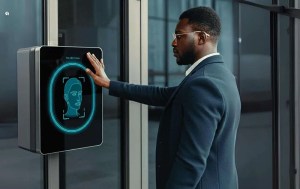
Including fingerprint, facial recognition and iris recognition access systems, this type of door access systems has ultra-high security and zero credential duplication risk. Modern facial recognition access equipment adopts 3D depth sensing algorithm, with a recognition accuracy rate of 99.9% and a recognition speed of less than 0.3 seconds. It is the preferred solution for high-end office buildings, financial institutions and confidential laboratory scenarios.
3. Mobile Cloud-Based Door Access Systems
Representing the latest development direction of the industry, cloud-based door access systems support Bluetooth, QR code and mobile remote unlocking. Managers can remotely modify permissions, view access records and monitor equipment operation status through the cloud platform, without on-site operation. This system is very suitable for chain enterprises, multi-branch institutions and 24-hour unattended venues, reducing manual management costs by more than 40%.
4. Intercom Integrated Door Access Systems
Integrating video intercom and access control functions, this system is mainly used in residential communities and apartment buildings. It supports visitor video verification, remote door opening and real-time abnormal alarm, realizing intelligent interaction between residents and visitors, and balancing safety and living convenience.
RS Security Professional Door Access Systems Advantages
With 15+ years of security equipment R&D and manufacturing experience, RS Security focuses on the iterative upgrading and scenario optimization of door access systems. The company’s full-series access products cover card recognition, biometric recognition and cloud intelligent access solutions, perfectly matching all modern mainstream access control needs.
Different from ordinary single-functional access equipment, our door access systems adopt upgraded intelligent algorithms and high-sensitivity sensing modules, with ultra-low false recognition rate and 24-hour stable operation capability. The cloud platform supports multi-device linkage and data traceability, which can be seamlessly connected with property management and enterprise attendance systems.
Whether it is low-cost conventional scenarios or high-standard confidential security scenarios, our customized access solutions can effectively solve the pain points of traditional equipment such as single function, poor stability and difficult management, helping users build intelligent, efficient and safe building access systems.
Conclusion
From mechanical locks to cloud IoT intelligent management, door access systems have achieved qualitative leaps in security, efficiency and intelligence. Modern mainstream access products tend to be diversified and integrated, meeting the differentiated security needs of various industries.
In the future, with the continuous development of AI and Internet of Things technology, door access systems will realize more accurate intelligent identification and automatic risk early warning, becoming an indispensable core part of smart building construction. As a professional access control solution provider, RS Security will continue to optimize product performance to empower the intelligent upgrading of global building security.