Introduction
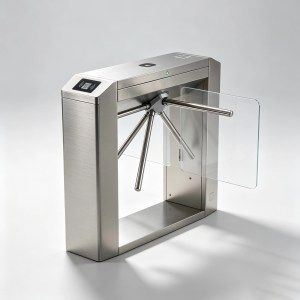
A reliable gym club security door is a critical facility for modern fitness venues. Unlike ordinary commercial doors, gym doors need to adapt to high-frequency opening and closing, humid sweat environments, accidental equipment collisions, and 24/7 unattended management demands. A qualified gym security door must balance security, durability, ventilation, aesthetics, and low maintenance costs.
According to industry statistics from the Steel Door Institute, over 62% of gym facility failures are caused by inferior door materials and unreasonable style selection, including rust deformation, impact damage, and poor ventilation leading to odor accumulation Intelligent Living. This article comprehensively analyzes the advantages and disadvantages of mainstream materials and styles of gym club security door, helping gym owners select the most suitable security door solution.
Common Materials for Gym Club Security Door: Pros and Cons
Material determines the core durability, security, and maintenance difficulty of gym club security door. Different materials fit different gym scales, budgets, and installation scenarios.

Steel Security Door
Steel is the most mainstream and practical material for professional gym club security door. High-quality galvanized steel and powder-coated steel have extremely high structural rigidity, with tensile strength reaching 30,000 to 50,000 PSI, effectively resisting kicking, collision, and violent damage Driscoll’s Lock & Key. Professional sports venue steel doors are specially reinforced to adapt to frequent impact from fitness equipment and crowds Security Direct.
Advantages: Super high security and impact resistance, long service life (20–30 years for indoor use), strong anti-deformation ability, and low daily maintenance. It can withstand more than 100,000 high-frequency opening and closing tests without failure, fully adapting to the busy traffic of gyms.
Disadvantages: Ordinary steel is prone to rust in long-term humid gym environments; the overall weight is large, requiring stable door frame installation; and the unit cost is higher than wooden and ordinary plastic doors.
Stainless Steel Security Door
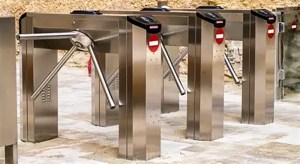
304 and 316 stainless steel doors are upgraded versions of steel doors, perfectly adapted to the high-humidity and sweat-rich environment of gyms. This material completely avoids rust and corrosion problems and is easy to clean, only needing daily wiping to maintain a smooth and clean surface.
Advantages: Excellent corrosion and rust resistance, waterproof and moisture-proof, easy daily maintenance, high appearance texture, and stable structure. It is the preferred material for high-end boutique gyms and yoga studios.
Disadvantages: High market cost; the surface is prone to scratches if collided by hard equipment for a long time; single color tone with relatively low personalized customization flexibility.
Tempered Glass Security Door
Tempered and vandal-resistant glass security doors are widely used in gym front desks and passage entrances. Professional security glass has passed UL 972 impact testing, which can resist hammer and impact damage to a certain extent Boon Edam.
Advantages: Transparent and beautiful, good light transmission, strong sense of space, convenient for managers to observe internal venue dynamics, and high customer experience.
Disadvantages: Poor anti-collision performance against heavy equipment impact; weak privacy; not suitable for independent locker rooms and private fitness areas; higher risk of breakage in high-intensity fitness scenarios.
Wooden Security Door
Wooden doors are mostly used for small private gyms and independent training rooms. Although they have a high natural appearance, they have obvious adaptability defects in gym scenarios APA Closet Doors.
Advantages: Low cost, warm texture, good sound insulation effect, suitable for private training rooms and rest areas.
Disadvantages: Easy to absorb moisture and deform, mold and crack in humid gym environments; poor anti-theft and anti-impact performance; short service life and frequent replacement required.
Main Styles of Gym Club Security Door: Pros and Cons
Swing-Style Gym Security Door
Swing doors are the most traditional style ofgym club security door, suitable for independent single-channel entrances and locker room passages.
Advantages: Simple structure, low failure rate, convenient manual and intelligent access control docking, wide compatibility with facial recognition, card swiping and other verification systems.
Disadvantages: Occupies internal and external passage space, easy to be blocked by fitness equipment; not suitable for high-traffic main entrances.
Sliding-Style Gym Security Door
Sliding security doors open horizontally, saving vertical passage space, and are widely used in gym main entrances and narrow wall openings.
Advantages: Space-saving, smooth opening and closing, suitable for high-frequency pedestrian flow, effectively avoiding crowd congestion during peak fitness hours.
Disadvantages: The sliding track is easy to accumulate dust and needs regular cleaning; the sealing performance is slightly weaker than swing doors.
Mesh Ventilated Security Door
Mesh security doors adopt hollow mesh structure, which is a professional customized style for gym ventilation needs Steel Furniture.
Advantages: Excellent air permeability, effectively solving gym odor and sultry problems; lightweight structure, flexible opening and closing, while maintaining basic anti-theft performance.
Disadvantages: Poor privacy; not suitable for locker rooms and private areas; weak anti-violent damage ability compared with solid steel doors.
Professional Gym Security Door Solutions from RS Security
Founded in 2008, RS Security focuses on the R&D and production of scenario-based security access equipment. Our customized gym club security door series perfectly solves the pain points of high humidity, high frequency use, and easy collision in fitness scenarios. We adopt high-standard galvanized steel and 304 stainless steel materials, with anti-rust, anti-corrosion and anti-scratch surface treatment, ensuring long-term stable operation in humid gym environments.
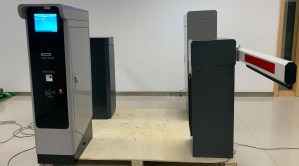
Our products cover swing, sliding and mesh ventilated styles, supporting free matching according to gym entrance space and functional areas. All doors can be seamlessly integrated with facial recognition, QR code access and cloud management systems, realizing intelligent unmanned access management. With low failure rate and ultra-low maintenance cost, our gym security doors have served more than 50 countries, becoming the preferred security solution for chain gyms and high-end fitness venues.
Conclusion
There is no one-size-fits-all best gym club security door. For gym main entrances with high traffic and high security requirements, reinforced steel sliding doors are the best choice; for humid and odor-prone venues, stainless steel ventilated doors excel; for private training rooms and rest areas, sound-insulating wooden doors and tempered glass doors are more appropriate.
When selecting gym club security door, gym owners need to comprehensively consider material durability, style adaptability, venue environment and budget. With professional customized design and high-quality manufacturing standards, RS Security provides targeted, durable and intelligent security door solutions for all types of gym clubs.