Government Security: Which Agencies Need Protection and Core Security Methods
Introduction
Government security refers to a comprehensive set of physical, technical, and digital protection strategies designed to safeguard government facilities, confidential data, public assets, and official personnel. Unlike commercial security systems, government-level protection requires higher stability, anti-intrusion performance, confidentiality, and emergency response capabilities. With the rapid rise of global security threats and digital attack risks, standardized government security deployment has become a basic guarantee for stable public governance and national facility operation.
According to 2026 official government security industry reports, unauthorized physical intrusion and data leakage cause over $2.1 billion in annual losses to public institutions worldwide. Meanwhile, statistics show that government agencies equipped with layered security protection systems can reduce safety and confidentiality risks by 89% compared with unprotected facilities UK Government Security: Identity and Access Control Policy. This article elaborates on which government institutions require mandatory security protection and the core effective government security defense methods.
Key Government Agencies That Require Strict Government Security Protection
1. Administrative and Municipal Government Buildings
Municipal halls, district government offices, and administrative service centers are core public governance venues with high pedestrian flow and frequent public service interactions. These agencies store a large amount of public administrative data and undertake daily official office work, making them key targets for illegal intrusion, information theft, and crowd disturbance. Sufficient government security measures are required to maintain daily office order and public safety.
2. Public Safety and Law Enforcement Institutions
Police stations, law enforcement centers, and public security command centers involve confidential case data, law enforcement records, and public safety scheduling information. These institutions face high-level security risks including violent intrusion and confidential information leakage. Strict physical isolation, access control, and real-time monitoring systems are indispensable basic configurations.
3. National Defense and Military Supporting Institutions
Military management offices, defense research institutions, and reserve training bases belong to high-confidentiality venues. Their internal infrastructure, personnel information, and research data are directly related to regional and national security, requiring top-level anti-intrusion, anti-surveillance, and anti-leakage security protection standards.
4. Fiscal, Tax and Economic Management Agencies
Tax bureaus, treasury management departments, and financial supervision institutions store massive public fund data, citizen tax information, and economic operation records. These sensitive data are highly attractive to cyber attackers and illegal groups, requiring dual protection of physical site security and digital data security.
5. Public Resource and Key Infrastructure Management Departments
Urban transportation management, energy supervision, and public resource management departments control core urban infrastructure scheduling authority. Once their facilities are invaded or systems are attacked, it may lead to urban operational paralysis, so continuous and stable government security protection must be maintained.
Core Government Security Protection Methods for Public Agencies
1. Layered Physical Isolation and Anti-Intrusion Protection
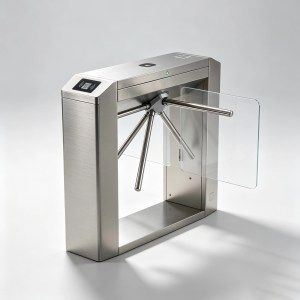
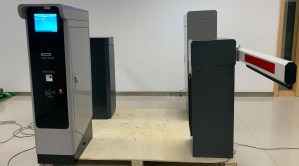
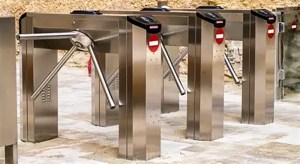
Physical defense is the first barrier of government security. Government facilities need closed-loop boundary protection including anti-climb fences, anti-collision vehicle boom gates, and high-security pedestrian turnstiles.
Different from ordinary commercial barriers, government-grade physical equipment needs to resist violent impact, forced demolition, and illegal climbing, forming layered isolation from external public areas, office areas, and core confidential areas. This hierarchical isolation effectively prevents irrelevant personnel from entering key office zones and eliminates basic safety hazards.

2. High-Precision Intelligent Access Control Management
Government venues have extremely strict access authority requirements. Traditional manual registration and simple card swiping cannot meet confidentiality management standards. Modern government security adopts multi-dimensional verification methods including face recognition, fingerprint authentication, encrypted IC card swiping, and permission hierarchical management UK Government Security Classifications Policy.
The system divides permissions according to staff positions, realizing that different employees can only access designated areas, and all access records are automatically archived and traceable, completely avoiding tailgating intrusion and unauthorized entry.
3. Full-Coverage AI Monitoring and Early Warning System
All public passages, building entrances, key confidential room entrances, and boundary corners of government institutions need full-coverage high-definition monitoring equipment. Equipped with AI intelligent analysis functions, the system can automatically identify abnormal behaviors such as long-term stay, violent damage, and forced entry, and trigger real-time alarm reminders. This 24/7 uninterrupted technical defense makes up for the blind spots of manual patrol and greatly improves the active early warning capability of government security.
4. Digital Data Security and Cyber Defense
Modern government security not only focuses on physical safety but also emphasizes digital confidentiality protection. Government agencies need to deploy professional firewalls, data encryption systems, and access traceability software to prevent hacker attacks, data tampering, and confidential information leakage. Strict data classification management and regular security vulnerability detection ensure the long-term security of public official data.

5. Emergency Security and Rapid Response Mechanism
Government facilities must be equipped with emergency safety configurations, including emergency quick-release access equipment, fire linkage systems, and security patrol linkage mechanisms. In case of emergencies such as illegal intrusion, fire, and personnel disputes, the system can quickly open evacuation passages and lock dangerous areas, ensuring the maximum safety of official personnel and public assets.
RS Security’s Customized Government Security Solutions
Founded in 2008, RS Security has long focused on high-standard security equipment research and development, providing professional customized government security supporting solutions for public institutions. Our government-grade pedestrian gates, anti-intrusion boom barriers, and intelligent access control systems are strictly manufactured in accordance with national public security standards, featuring anti-violence damage, anti-tailgating, high precision recognition, and 24-hour stable operation.
Different from ordinary commercial security products, our equipment supports multi-level permission management, full data traceability, and emergency linkage functions, fully adapting to the high confidentiality and high safety requirements of government office scenarios. All products have passed international security certification, with ultra-low failure rate and strong environmental adaptability. Up to now, our government security supporting equipment has been serving public institutions in more than 50 countries, helping government agencies build standardized, intelligent and reliable safety defense systems.
Conclusion
All administrative, law enforcement, national defense, fiscal and infrastructure management government agencies need professional government security protection. Relying on layered physical isolation, intelligent access control, AI monitoring early warning, digital defense and emergency response mechanisms, government institutions can effectively resist external intrusion risks and protect public safety and confidential data. With professional scenario customization and high-standard product quality, RS Security provides reliable, long-term and stable security hardware support for modern government safety construction.